



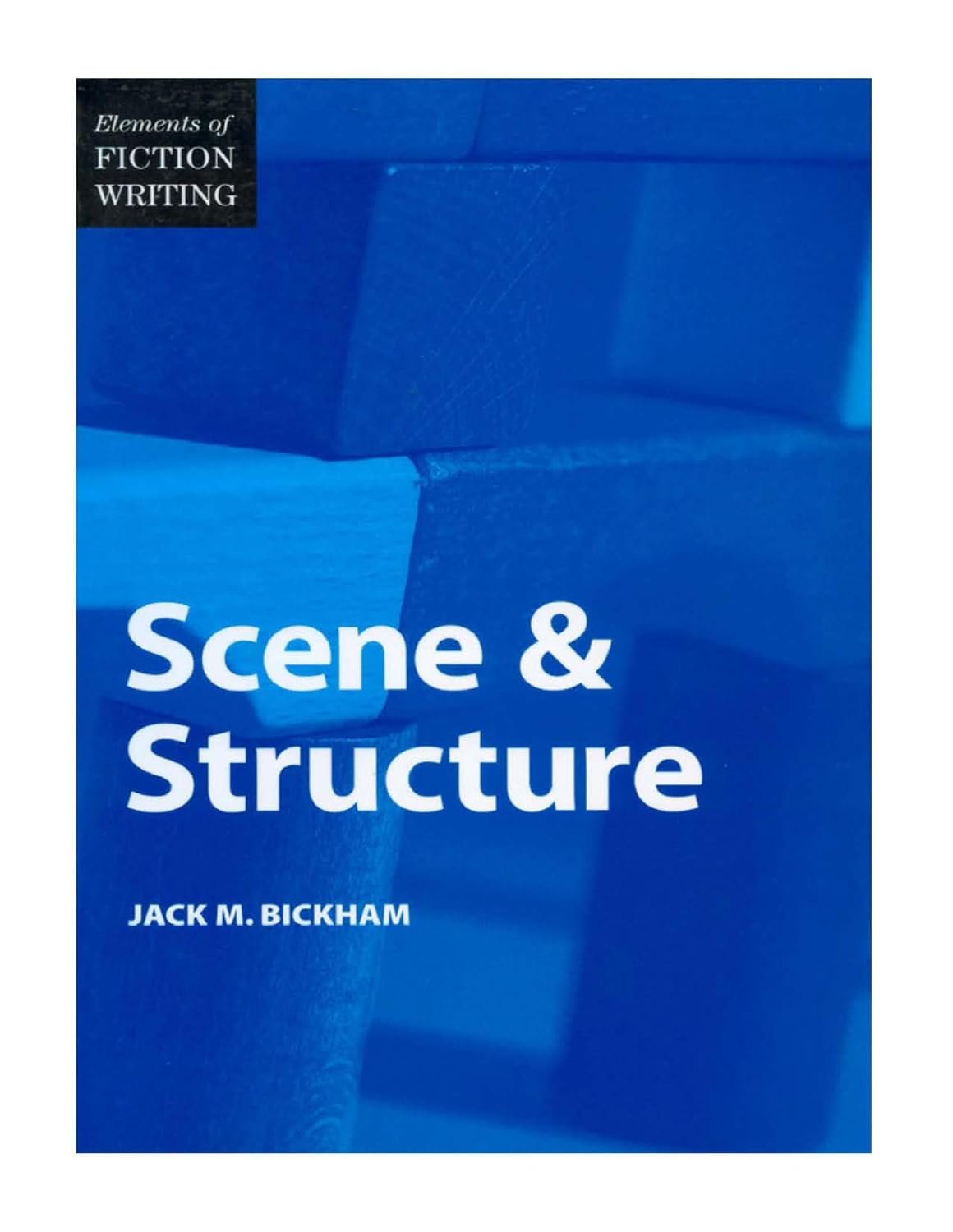
24 Oct Crafting the Narrative: Unveiling the Art of Scene & Structure
Review of Scene & Structure by Jack M. Bickham
If you’ve ever stared at a blank page, feeling the weight of your story pile up like a looming deadline, you’re not alone. This was exactly where I found myself when Scene & Structure caught my eye. Jack M. Bickham’s insightful writing guide promised to shed light on the often-shadowy domain of narrative architecture. As a writer who loves diving deep into the mechanics of storytelling, I was eager to see what gems Bickham had to offer.
Bickham’s core philosophy is elegantly straightforward: a compelling narrative requires a solid structure. He emphasizes that readers are, at their core, thrill-seekers; they’re drawn in by change and conflict. With vivid examples drawn from his own novels, like Dropshot and Tiebreaker, he lays out the anatomy of a good story scene by scene. The reader’s journey hinges on a well-crafted framework that provides “cause and effect,” ensuring that the stakes feel real and the action forward-moving. The idea that “every scene should end in disaster” struck me—a playful reminder of the dramatic tension that keeps readers glued to the page.
One of the standout concepts is Bickham’s "scene-sequel" structure, where scenes filled with external action are followed by introspective sequels allowing for deeper character development. This cyclical rhythm creates a natural pacing that I found particularly engaging. His illustrations of action interspersed with internal conflict made for an enlightening journey through the mechanics of storytelling—a balancing act effectively described that invites writers to juggle pace and emotion like a seasoned performer.




What I appreciated most was Bickham’s no-nonsense approach. He stresses that while a linear narrative structure is a reliable baseline, the best stories arise from a clear understanding of narrative motion. Bickham famously notes that "believable fiction must make more sense than real life," a reminder that as writers, we hold the power to shape a coherent, satisfying story arc. This perspective resonates with anyone struggling to make sense of their own tangled plots.
While reading, I found myself marking memorable quotes and dog-earing pages, particularly experiencing resonances with testimonials echoed in reviews. Many fellow readers highlighted the book’s utility in teaching novice writers, and I completely agree. It’s a treasure trove of practical tips that lean into psychological insights about reader engagement. If Bickham’s prose at times feels overly functional, those moments are easily overlooked when one considers the wealth of wisdom offered in just 176 pages.
In conclusion, Scene & Structure is an essential read for writers at any stage, particularly those grappling with narrative form or looking to elevate their storytelling game. Whether you’re crafting a high-stakes thriller or a contemplative literary piece, Bickham’s insights will guide you in crafting a satisfying and compelling narrative. This book doesn’t just unlock the secrets to structure; it also inspires a confidence that every aspiring writer needs. If you’ve ever faced a daunting blank page, this guide could very well lead you to the art of building engaging worlds and unforgettable stories. Grab your pen, open your mind, and let Bickham show you how to transform your ideas into a journey worth taking!
