



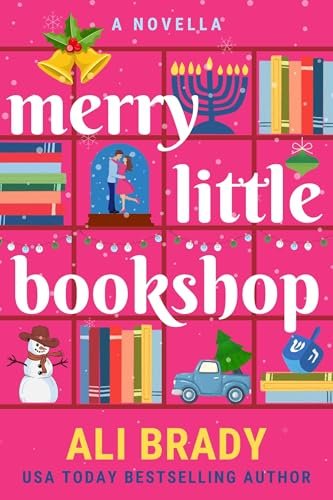
08 Dec Book Review of Merry Little Bookshop
Review of Merry Little Bookshop by Annie W. Lentz & Delia G. Parks
Growing up in Azle, Texas, I’ve always felt a special connection to stories set in small towns, especially if they reflect the quirks and charm of my beloved hometown. So when I heard about Merry Little Bookshop, inspired by a book signing at The Reading Rabbit—a haven for book lovers—I couldn’t resist. It’s rare to find a book that intertwines familiarity with fiction, especially through two authors I’d never encountered before. Excitement peaked as I reserved my copy for release day, ready to dive into a narrative resembling the Azle I knew.
As I turned the pages, the town of Azalea unfolded—charming, cozy, and certainly nostalgic. However, the portrayal felt more like a Hallmark movie stereotype than the Azle of my day-to-day life. The vivid imagery of an idyllic small town brought back memories of childhood summers, yet the town’s spirit seemed stuck in the 1970s rather than the bustling, thriving community of today. The authors’ love for their setting is palpable, though the Azalea we explore lacks the complexities of a town that has grown significantly in population and vibrancy.
Our protagonist, Sarah—or is it Shira?—finds herself at the center of a story that feels as familiar as it does simplistic. While she’s depicted physically with dark hair and a diminutive stature, her character development seems stifled. One can’t help but wonder about the depth of her personality beyond being the object of affection for Jonny, the Greek Adonis who fits the trope of the perfect man. If the goal was to create a relatable figure for readers to project onto, Sarah’s blandness may have worked too effectively; she becomes a mere canvas for Jonny’s over-the-top romantic gestures rather than a vibrant character in her own right.





Speaking of Jonny, it’s hard to miss the over-the-top, almost exaggerated depictions of masculinity. He dons his Carhartt jacket as if it’s a uniform—an unmistakable trope that echoes throughout the narrative. Jonny’s thoughtful, generous nature might be swoon-worthy, but it renders him a bit of a caricature. The sheer frequency of references to his jacket and wealth can feel overwhelming, leading to moments of eye-rolling rather than swooning.
Lentz and Parks offer a delightful blend of holiday cheer with their depiction of Christmas and Hanukkah, though one might wish for a deeper exploration of these traditions. The moments celebrating the season ring beautifully, although the absence of genuine religious nuance can leave readers longing for authenticity amidst the festive cheer.
Ultimately, Merry Little Bookshop presents a lighthearted escape filled with romantic escapades perfect for those looking for an easy holiday read. While it might not capture my hometown’s contemporary essence, it does offer escapism and fun. If you’re in search of a whirlwind romance marked by cliché but still sprinkled with holiday sparkle and laughter, this book may just be your cup of cocoa.
In reflecting on my reading journey, I found that while the narrative may not have resonated fully with my experience, it offered a reminder of how powerful storytelling can be in transporting us, whether to the exact corners of our past or to the familiar warmth of holiday traditions. If you bought this book for the same reasons I did, be prepared for a light, romantic read that leans into holiday magic, drawing you into the charm of a small town—even if it is through a lens of nostalgia tinged with the simplicity of storybook endings.
