



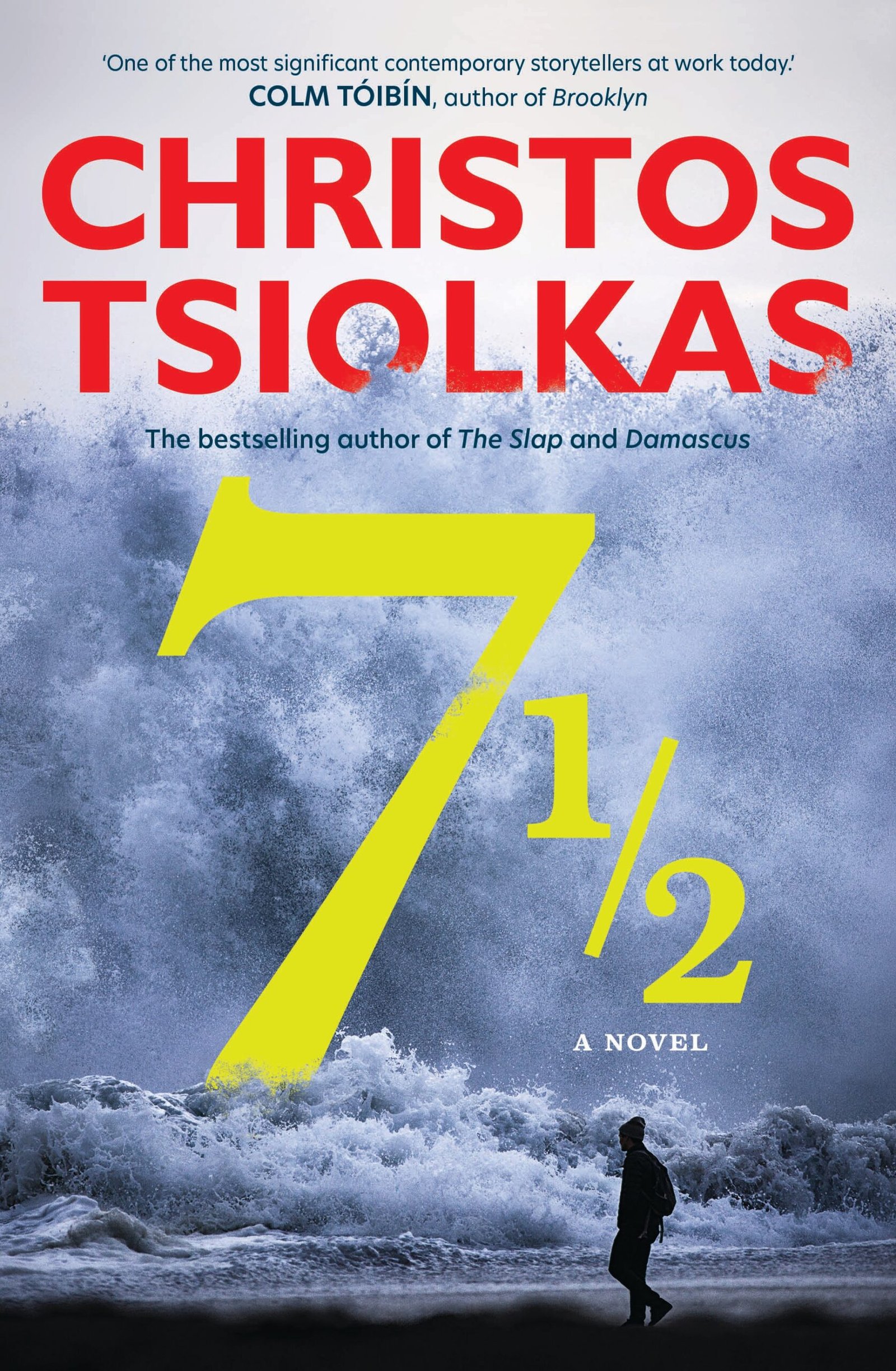
07 Jul Book Review of 7 1/2
Reflections on 7 1/2 by Christos Tsiolkas: Beauty and Complexity Interwoven
There’s something irresistible about 7 1/2, the latest work from Christos Tsiolkas, that had me eager to dive in. Perhaps it’s the audacious concept: a semi-fictionalized version of Tsiolkas himself, venturing into a writing retreat while wrestling with the very essence of art and beauty amidst chaos. As a reader who often grapples with the intersection of personal identity and the broader political landscape, I felt drawn to explore how this novel would tackle such daunting themes.
7 1/2 centers on Tsiolkas, the artist, who retreats to the picturesque coast of New South Wales, hoping to pen a novel devoid of the tumultuous issues that have marked his previous works. History, politics, and identity seem too heavy in his mind, so he seeks to craft something that celebrates beauty. What unfolds is a multilayered narrative that intertwines his experiences with nature, memories of his youth, and contemplations about writing—each thread weaving a tapestry of reflection on both art and existence.
One of the aspects that truly resonated with me was how effortlessly Tsiolkas transitions from memory into fiction and back again. The unconventional structure allows for a fluid exploration of themes, yet it often feels dense and multilayered. I couldn’t help but appreciate how he challenges conventional storytelling norms. Yet, this very complexity sometimes left me feeling adrift, wondering how to navigate the layers of meta-narrative.



Tsiolkas’s prose is, without a doubt, stunning. His vivid depictions of the New South Wales landscape are mesmerizing, and the tenderness in his portrayal of relationships imbues the text with an emotional depth that contrasts the often fragmented thoughts running through the fictionalized narrative. For instance, his reflections on the quiet nature of love and erotic desire are profoundly intimate, capturing the quiet yet urgent connections we build in our lives.
However, it’s in the thematic exploration of beauty divorced from politics and hardship where I found myself wrestling with Tsiolkas’s assertions. His proclamation that beauty should stand separate from the weighty issues of existence feels both revolutionary and restrictive. Andrea, a key character who represents the voice of dissent, raises crucial points, yet ultimately feels like a straw man in Tsiolkas’s discourse. While her challenges could have propelled deeper conversations, they instead reinforce what feels like a simplistic dichotomy: beauty vs. the world’s messy intricacies.
One memorable moment for me was when Tsiolkas engages with the idea of aesthetic value over political engagement, citing views that felt at odds with the complexity of human experience that he’s previously excelled in capturing. There’s a part of me that wondered if this juxtaposition was meant to provoke or simply to assert a kind of elitism in art. It’s clever, certainly—but does it delve deeply enough?
Despite my reservations, 7 1/2 is undeniably a beautiful read—crafted with care, rich in lush imagery, and punctuated by philosophical musings that are bound to leave you contemplating long after you close the book. My reading experience mirrored the author’s own struggle with his artistic identity: messy, challenging, yet ultimately rewarding.
I believe 7 1/2 will resonate with those who appreciate introspective literature that confronts the roles of beauty, politics, and personal identity. For readers looking to dissect the nuances of creativity, or those curious about how one can grapple with their artistic voice amidst the tumult of modern life, Tsiolkas offers a provocative journey worth undertaking. In the end, it’s a book that emphasizes the importance of pondering, perhaps more than even creating, in the quest for meaning—and that’s something I deeply appreciated.
Discover more about 7 1/2 on GoodReads >>
