

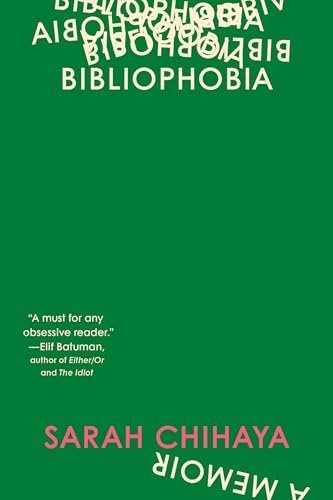
05 May Book Review of Bibliophobia: A Memoir
Bibliophobia: A Memoir by Sarah Chihaya – A Life-Ruiner Worth Every Page
There are some books that sneak up on you, and for me, Bibliophobia: A Memoir by Sarah Chihaya was one of those jaw-dropping encounters. I mean, did I just read one of the best books of 2025… in 2024? Chihaya’s work is a stunning homage to the complex relationship we often have with literature, weaving in threads of depression, family trauma, and racial identity. This is not merely a memoir; it’s an exploration of a diasporic existence that feels both intimate and universal.
Chihaya crafts her narrative with such clarity and elegance that one cannot help but highlight almost every page. She writes, "I was enraptured by the book itself but equally enraptured with the sense that it gave me someone to be," a sentiment that resonates deeply with anyone who has found refuge in the pages of a beloved book. Her prose serves as a mirror reflecting our own vulnerabilities, making Bibliophobia a visceral experience.


Key themes of depression and the haunting existence of "Life Ruiners" are woven throughout her reflections. This phrase could not be more apt—books often pull at our deeper selves and expose us to the uncomfortable truth of our internal struggles. Chihaya’s observation that “to call it a Life Ruiner… is not to say that a life of letters is necessarily ruination” encapsulates the dichotomy so many readers can relate to. It is a visceral reminder of how literature enchants and ensnares us, making us yearn for more yet fearful of the depths it can plunge us into.
The honesty with which she addresses her mental health is both heartbreaking and enlightening. She bravely lays bare her experience with depression, succinctly stating, “It is more than the dull throb–it is a dull dullness, a drained immobility.” This poignant description captures the essence of depression that many struggle to articulate. Her grappling with this darkness offers solace to those navigating similar paths, validating those shared feelings of hopelessness and fatigue.
Chihaya’s exploration of racial identity is equally compelling. As a child of immigrants, her experience captures the tightrope walk between the two worlds she inhabits, creating a tapestry where cultural expectations and personal aspirations clash. She writes, “Nervous breakdown was not for the children of immigrants,” a powerful reminder of the silence surrounding mental health issues within certain communities. Her voice is crucial in breaking that silence, inviting readers to engage in their own narratives of complex identity.
One of the most intriguing aspects of Bibliophobia is its structure—or lack thereof. Chihaya’s approach is not strictly chronological; rather, it reflects the fluidity of memory. This method might leave some readers craving a more traditional storytelling arc, but for me, it beautifully mirrors the chaotic nature of her thoughts and experiences.
With every page, I found myself thinking, “Why did I not write this?” Chihaya describes feelings and experiences that are so intimately familiar to me, yet her insights elevate them to an art form. It’s not just a memoir; it’s a shared catharsis for anyone who has ever felt like an outsider in their own narrative.
In conclusion, I couldn’t recommend Bibliophobia more highly. It’s perfect for anyone who has ever sought solace in books or struggled with their identity, mental health, or familial expectations. This work has the potential to become a life-altering piece for readers, illuminating parts of themselves they may have long ignored. Sarah Chihaya’s courage and vulnerability resonate powerfully, making it a significant, impactful read that will stay with you long after you turn the final page.
