



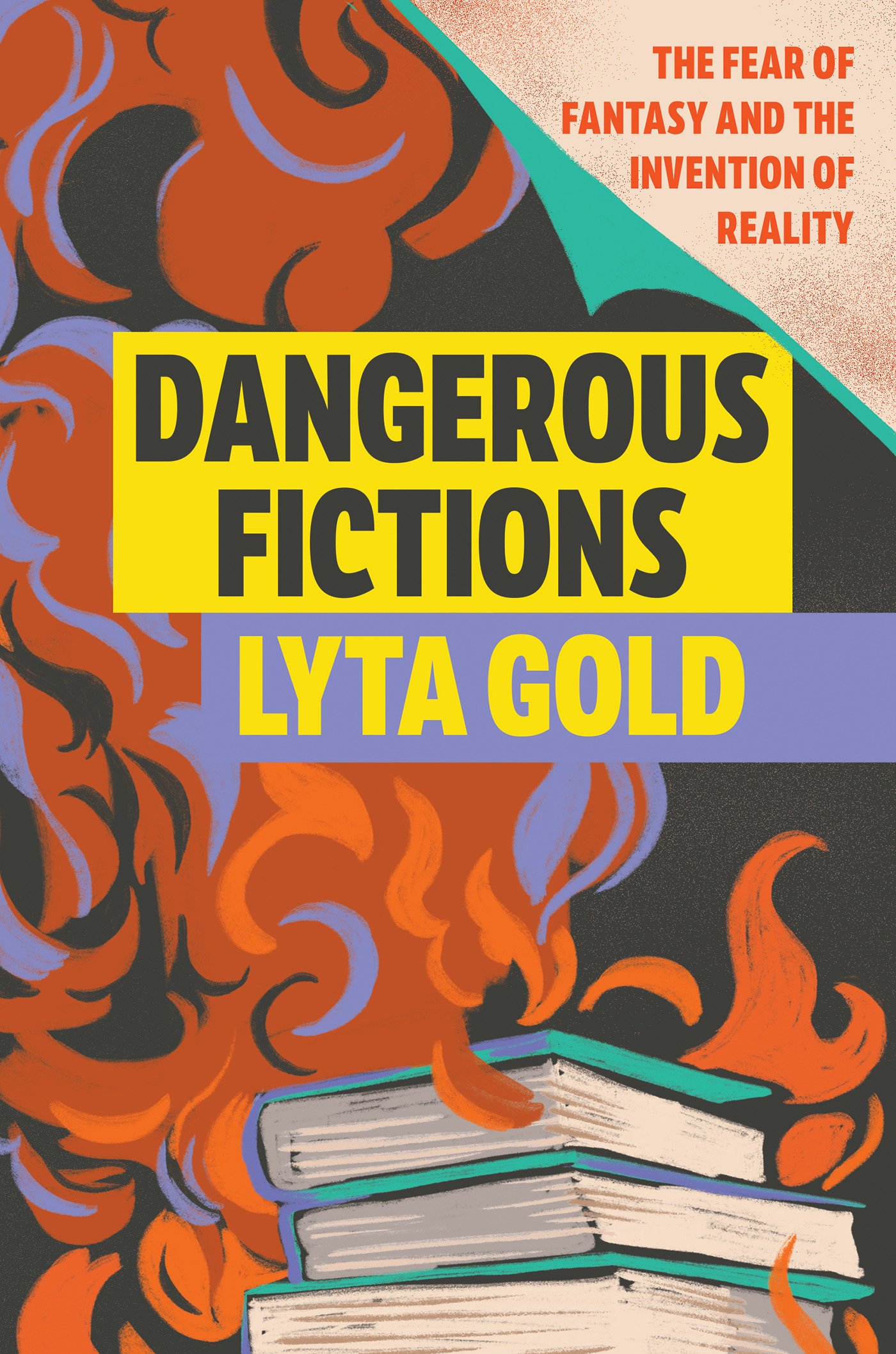
18 Nov Book Review of Dangerous Fictions: The Fear of Fantasy and the Inventi…
A Librarian’s Reflection on Dangerous Fictions: Navigating the Terrain of Fantasy and Reality
As a librarian deeply entrenched in the swirling vortex of book bans and challenges to literature, Dangerous Fictions: The Fear of Fantasy and the Inventiveness of Reality by Lyta Gold grabbed my attention like a moth to a flame. I wasn’t sure what to expect, especially considering my fatigue with the increasingly rabid discussions surrounding censorship. However, Gold’s accessible writing style, rich with humor and acerbic wit, felt like a breath of fresh air amidst the heavy fog of “remove this book” angst I’ve seen too often.
Gold’s book dives into the evolving relationship between fiction, reality, and the socio-political context in which they coexist. She carefully dissects the motives behind censorship movements, revealing the underlying disgust and sense of superiority that often permeates the desire to ban books that reflect diverse narratives, especially those involving LGBTQ+ individuals and people of color. Through her witty prose, Gold encourages us to question why certain narratives are seen as dangerous, convincingly framing the fight against “dangerous” fiction as part of a larger ideological warfare—one that insists on a singular, often oppressive reality.

What stands out in Gold’s writing is her ability to tackle hefty themes without losing a sense of personal connection. Her assertion that "fascism is as fascism does" when it comes to the right-wing’s selective embrace of fiction struck a nerve with me. It was refreshing to see someone articulate the notion that those who wish to erase specific narratives are not just reacting against ideas but are actively attempting to rewrite societal realities. The interplay of fact and fiction becomes a battleground where the stakes are the very soul of civilization.
Throughout the text, Gold’s insights shine like stars in a dark sky—the way she emphasizes the power of fiction to shape perceptions is both riveting and sobering. Her statement, "Fear of other people, and how they might work together to shift reality," resonates deeply in today’s climate of divisiveness. She also challenges readers to consider the implications of representation in literature and its capacity to shape young minds. Censorship, she argues, is an affront not just to creativity but to the very essence of empathy and understanding.
While some reviewers have pointed out that the book feels disjointed at times, I found this meandering style delightful. It felt like wandering through a maze of thoughts, gathering insights as I went. Gold’s knack for striking quotes—like "It’s hard to know exactly what we’re missing in our lives when storytelling is destroyed"—lingers long after turning the last page.
In the end, Dangerous Fictions is recommended not just for librarians or those in the literary field but for anyone concerned with the intertwining of art, ideology, and identity. Gold’s ability to critique and contextualize complex ideas makes this book a vital read, especially for those navigating the tumultuous waters of modern discourse. It fueled my passion for defending literature’s role in fostering empathy and understanding, reminding me of the importance of standing firm against censorship in all its forms.
Ultimately, this book left me invigorated—as if I had shared an inspiring conversation with a kindred spirit. Gold’s keen observations and sharp wit serve as both a call-to-arms against the perils of censorship and a reminder of the power narratives hold to shape our understanding of the world. Highly recommended for anyone who cherishes the freedom to read and the joy of storytelling. 4 out of 5 stars.
Discover more about Dangerous Fictions: The Fear of Fantasy and the Inventi… on GoodReads >>
