



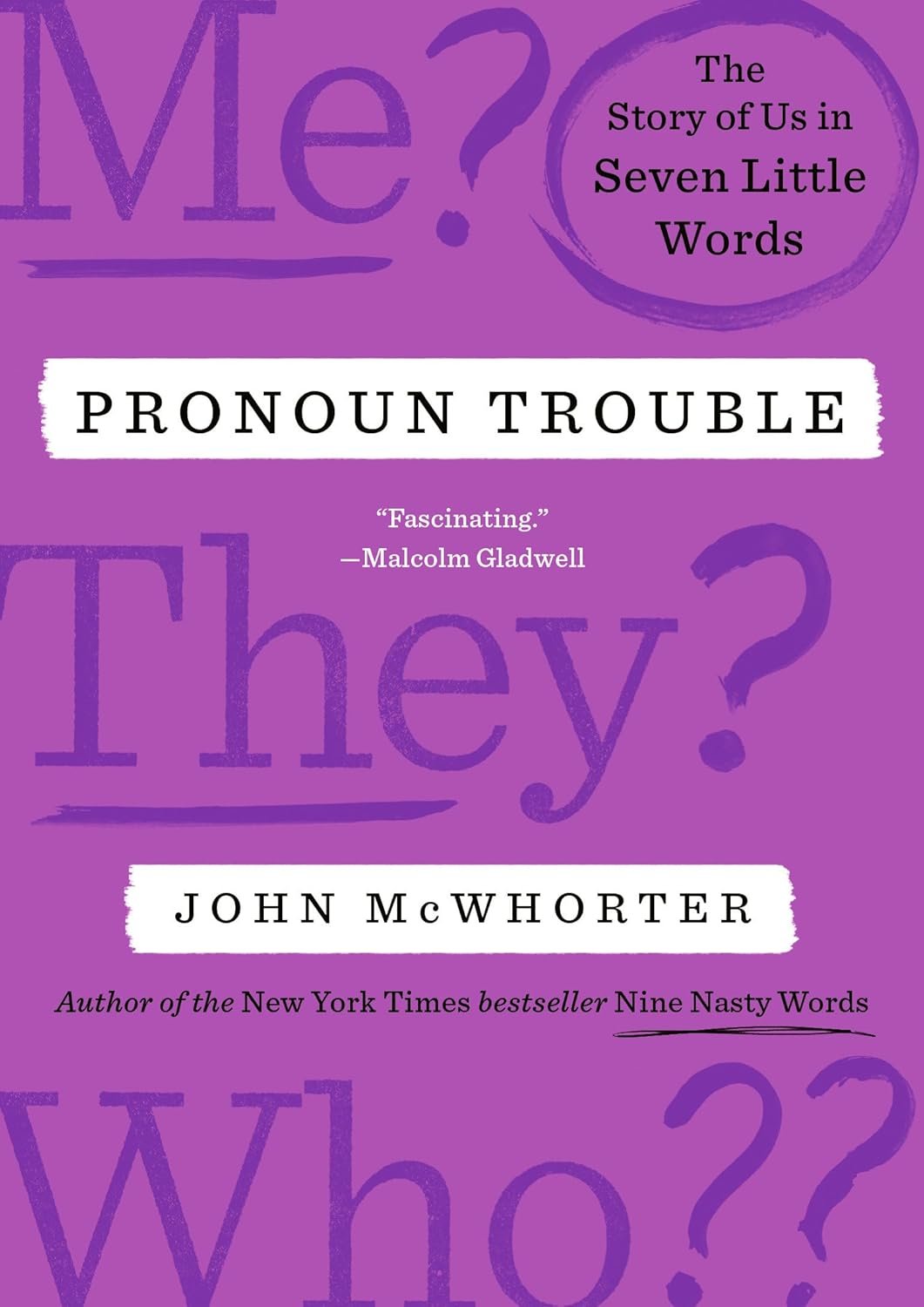
16 Aug Book Review of Pronoun Trouble: The Story of Us in Seven Little Words
Pronoun Trouble: The Story of Us in Seven Little Words
As a language lover and a lifelong observer of how we communicate, I was instantly captivated by John McWhorter’s Pronoun Trouble: The Story of Us in Seven Little Words. McWhorter, known for his keen linguistic insights and sharp wit, has always intrigued me with his ability to make complex topics relatable and fun. This new exploration of pronouns not only promises to delve into their historical evolution but also into their social implications—something I knew I couldn’t miss.
From the moment I cracked open this book, I felt like I was sitting down for a casual debate with McWhorter himself. The conversational tone draws you in, making what could be a dry topic feel lively and engaging. He deftly navigates through the minefield of contemporary pronoun politics while also rooting his discussion in the rich history of the English language. His humor, particularly when referencing classic Looney Tunes, adds a delightful layer to the text, turning grammar into a vibrant conversation rather than an academic lecture.
One of the most refreshing elements of the book is McWhorter’s audacity in challenging outdated grammatical norms. For example, his assertion that "me" can occupy the role of a subject pronoun might raise eyebrows, but he presents compelling arguments that absolutely resonate with how we speak in everyday life. The delightfully defiant line, “Who did this? Me,” encapsulates this rebellious spirit against the strict rules of 19th-century grammar. For those of us who’ve felt constrained by grammar teachers wielding red pens like swords, this is liberating!


Much of the book revolves around how pronouns shape our identity and societal structures. McWhorter doesn’t shy away from discussing the nuanced baggage surrounding the use of "they/them," especially when embracing non-binary identities. He employs historical anecdotes and linguistic evolution, pointing out that we’ve long been using these forms without batting an eye—in other words, it’s not as revolutionary as some might think!
The deeper layers reveal just how much we often overlook the importance of pronouns in our communication. McWhorter’s exploration of second-person plural pronouns—like "y’all" and "you guys"—opened my eyes to the casualness with which we navigate group identity. The fact that he acknowledges both sides adds depth to the discussion, recognizing their colloquial roots while also hinting at a longing for collective pronouns that might unify.
If I had to describe McWhorter’s writing style, it’s like a conversation with a knowledgeable friend who isn’t afraid to challenge your preconceived notions. He deftly paces the book from amusing anecdotes to reflective critiques, making it accessible while still delivering profound insights. His playful commentary on our linguistic quirks makes it enjoyable to read, ensuring that while we’re learning, we’re also laughing.
As I closed the book, I couldn’t help but feel invigorated. McWhorter is unapologetically nuanced, and while the world may sometimes shy away from complexity, he embraces it wholeheartedly. I would highly recommend Pronoun Trouble to language enthusiasts, anyone grappling with identity in communication, or simply those looking for a lively and insightful read. It’s a stimulating reminder that the words we choose do more than just signify; they connect us and shape our interactions in profound ways. In an era where every word counts, McWhorter gives us much to consider—and cheer about.
Discover more about Pronoun Trouble: The Story of Us in Seven Little Words on GoodReads >>
