



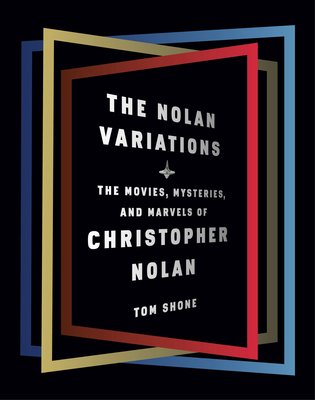
11 Jun Book Review of The Nolan Variations: The Movies, Mysteries, and Marvel…
Exploring the Artistic Mind of Christopher Nolan: A Review of The Nolan Variations: The Movies, Mysteries, and Marvel
Have you ever stumbled upon a book that feels like a talisman imbued with its author’s essence? That’s precisely the charm of The Nolan Variations: The Movies, Mysteries, and Marvel by Tom Shone. I was drawn to it not only for its exploration of Christopher Nolan’s cinematic genius but also because Nolan’s films have always ignited a spark of curiosity in me. The intricate web of narrative style, philosophical underpinnings, and emotional weight in his works creates a labyrinth I’ve often wanted to traverse. Shone’s book promises a guide through that maze, and trust me, it does not disappoint.
From the opening pages, Shone encapsulates Nolan’s artistic obsessions—his fascination with time, space, and narrative structures. Take, for example, the idea that “the relationship between a written screenplay and a finished film is very inadequate.” This insight resonates deeply with anyone who has ever attempted to convey a complex thought or emotion in their own work. As I reflected on my creative endeavors, I found comfort in Nolan’s approach; it’s a reminder that the journey of creation often surpasses the destination.

As Shone skillfully delves into Nolan’s psyche, he shares anecdotes that create profound connections to Nolan’s personal history. From familial influences—like Nolan watching Ferris Bueller’s Day Off as a child in Chicago—to his thoughts on filmmaking that echo through moments of discombobulation, readers are granted an intimate glimpse into the evolution of a master storyteller. One particularly thought-provoking quote highlights this notion: “Memory is entwined with imagination, the present tense, and a fantasy past.” It’s a notion that not only is vital to Nolan’s work but also to our individual experiences as we weave our stories.
The writing style in The Nolan Variations is engagingly erudite, blending academic depth with a conversational tone that feels just right. I appreciated how Shone crafts his narrative—like a well-edited film, it builds momentum. His use of notable quotes, like Sam Mendes describing the book as “a superb book about a living filmmaker,” serves not just as a commendation, but as an invitation for deeper appreciation of Nolan’s artistry.
For those who revel in cinematic conversations or have ever found themselves wrapped in the philosophical layers of Nolan’s films, this book feels like a rewarding treasure trove. It’s as if Rory Wilson, to whom the book is dedicated, has handed us a key to Nolan’s intricate universe. Yet, the book does not solely analyze films; it evokes a shared experience that resonates with the empathetic nature of audience engagement that Nolan champions.
As I closed the book, I felt akin to a filmgoer leaving a cinema, buzzing with thoughts and interpretations sparked by the stories told. Whether you’re a die-hard Nolan fanatic or simply a casual filmgoer curious about the deeper currents of modern filmmaking, The Nolan Variations offers something for everyone.
In a world bustling with visual narratives and digital distractions, Shone’s exploration of Nolan’s work invites us to pause, reflect, and perhaps rethink our relationship with storytelling. If you seek a book that intertwines formidable insight, artistry, and nostalgia, I wholeheartedly recommend picking up this one. It’s not just about the films; it’s about how those films make us feel and reflect on our own narratives. Happy reading!
Discover more about The Nolan Variations: The Movies, Mysteries, and Marvel… on GoodReads >>
