



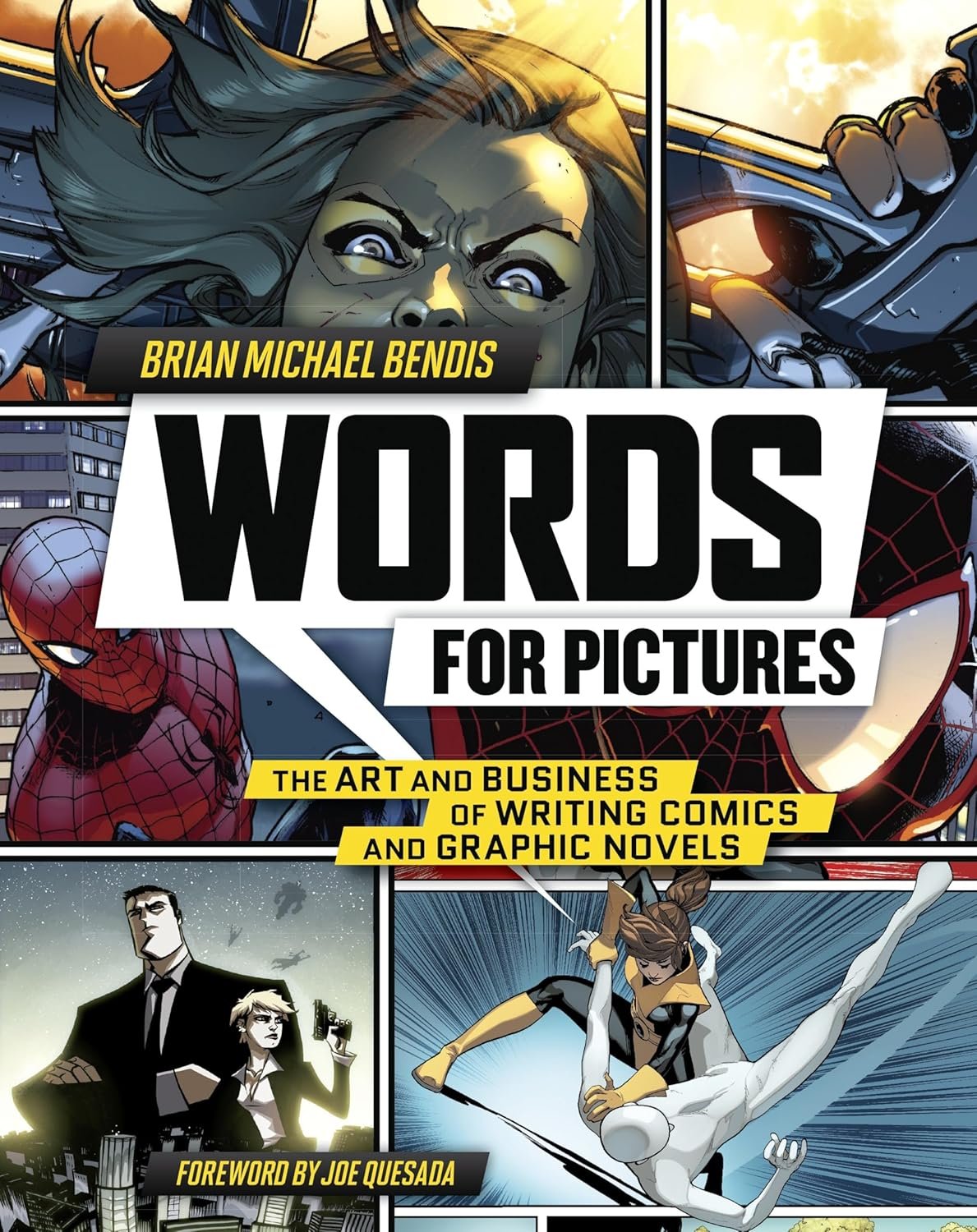
08 Dec Crafting Visual Narratives: A Deep Dive into Words for Pictures
Unpacking the Magic of Comic Writing: A Review of Words for Pictures
When I first picked up Words for Pictures: The Art and Business of Writing Comics and Graphic Novels by Brian Michael Bendis, I felt a buzz of excitement akin to unearthing a long-lost comic book in the attic. As a lifelong comic book fan and aspiring writer, the prospect of gaining insight from one of the leading voices in contemporary comics was irresistible. Bendis, the mastermind behind beloved series such as Ultimate Spider-Man and The Avengers, opens the door to the creative process with a charming mix of professionalism and relatability.
A Journey Through the Comic-Making Process
The book serves as a comprehensive guide for aspiring comic creators, but what truly sets it apart is Bendis’ candid storytelling woven throughout the chapters. He doesn’t simply regurgitate what can often feel like dry, formulaic advice; instead, he shares the evolution of his own writing style and how he adapts his approach to compliment the unique strengths of various artists. It’s a refreshing perspective that highlights the collaborative nature of this art form.
One standout section is the "Writing for Artists" chapter, where Bendis includes insights from established illustrators and editors. Their feedback feels like a treasure trove, offering glimpses into the minds of those who breathe life into the scripts. It’s fascinating to learn what artists really want from writers—something many guides fail to address.



Engaging Style and Practical Exercises
Bendis’ writing style is incredibly engaging—light, conversational, and punctuated with humor. You feel as though you’re sitting across from him in a coffee shop, hanging on his every word. He balances practical tips with motivational insights, seamlessly discussing the business side of comics alongside the emotional landscape of being a writer. It’s both inspiring and refreshing to see an industry professional address the inevitable fears and doubts that come with the territory.
One of the book’s greatest strengths is the inclusion of interactive exercises at the end of chapters. While writing exercises can sometimes feel like a chore, Bendis manages to make them fun and thought-provoking, providing real value that pushes you to refine your craft.
Highlights and Resonating Quotes
Several sections struck me profoundly, particularly Bendis’ emphasis on the mindset needed for success in such a competitive field. He candidly discusses the importance of resilience and creativity, often rephrasing challenges as opportunities for growth. A quote that lingered with me was about finding "your own voice," underlining the need for authenticity in storytelling. This resonated deeply with me, as it’s a sentiment that feels applicable not just to comic writing but to all forms of creative expression.
Conclusion: A Must-Read for Comic Enthusiasts
Words for Pictures is more than just a how-to guide; it’s a celebration of the comic writing craft. It’s perfect for anyone looking to break into the industry, as well as seasoned creators seeking a fresh perspective. Bendis’ approachable style and wealth of knowledge make it an essential read. Personally, it has reignited my passion for storytelling and reminded me of the intricate dance between words and illustrations.
If you’re a comic book lover, aspiring writer, or just someone curious about the behind-the-scenes world of comics, this book is a must-add to your collection. It’s a vibrant blend of instruction, inspiration, and insight that will leave you eager to pen your next comic tale.
You can find Words for Pictures: The Art and Business of Writing Comics and Graphic Novels here >>
